

Color, texture, fit, shoes, coastal wind, and the few things to leave at home.Half your closet is on the bed. The other half is on the floor. You have tried on four different shirts and somehow feel worse about all of them than you did fifteen minutes ago.
Deep breath. This happens to almost everyone before a session, and it is fixable in about five minutes once you know what actually matters.
What Should You Actually Wear for Dog Photos?
Short answer: yourself, a little elevated. Choose well fitting, comfortable clothes in three or four colors that work together, with some texture, that you can kneel and walk in.
If you live in jeans and a soft tee, wear jeans and a soft tee. Just choose the ones that fit well and make you feel like you. This is not the day to borrow a completely different personality from Pinterest.
Pull a few favorites from your closet first. If something fits well, feels good, and is not worn thin, it is probably already right. If your closet is coming up empty, buy something new that still feels like an upgraded version of what you already wear, not a costume.
It also helps to think about where we are shooting. A quiet wooded trail calls for something a little different than an open beach at golden hour. Your outfit does not need to match the setting exactly, just feel like it belongs there, and like something you can actually move in. We will be walking, kneeling, and chasing a good moment more than you might expect.
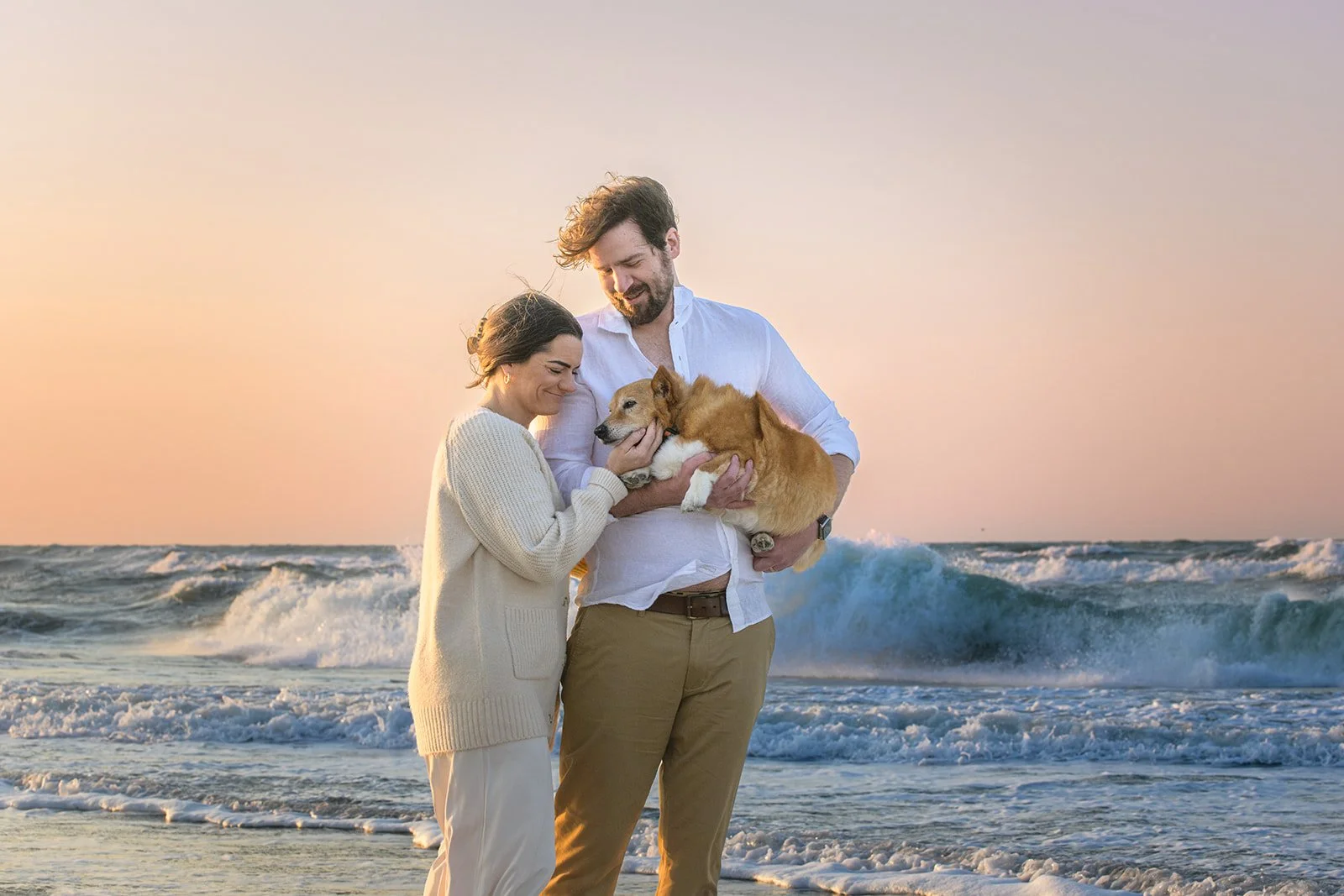
Cream, white, and khaki. Nothing matches the corgi, and everything belongs on the beach.
How Do You Build a Color Palette for Dog Photos?
Pick three or four colors total, one or two neutrals and one or two accents that belong in the setting. This is the part that trips people up the most, and it is also the easiest to get right once you have a framework.
Start with your neutrals. Cream, white, black, gray, tan, and khaki all work. Then add an accent or two that shows up naturally in the season or the setting. Navy, olive, mustard, blush, or a soft sky blue all pair beautifully with the marshes, docks, and beaches around Emerald Isle and Beaufort.
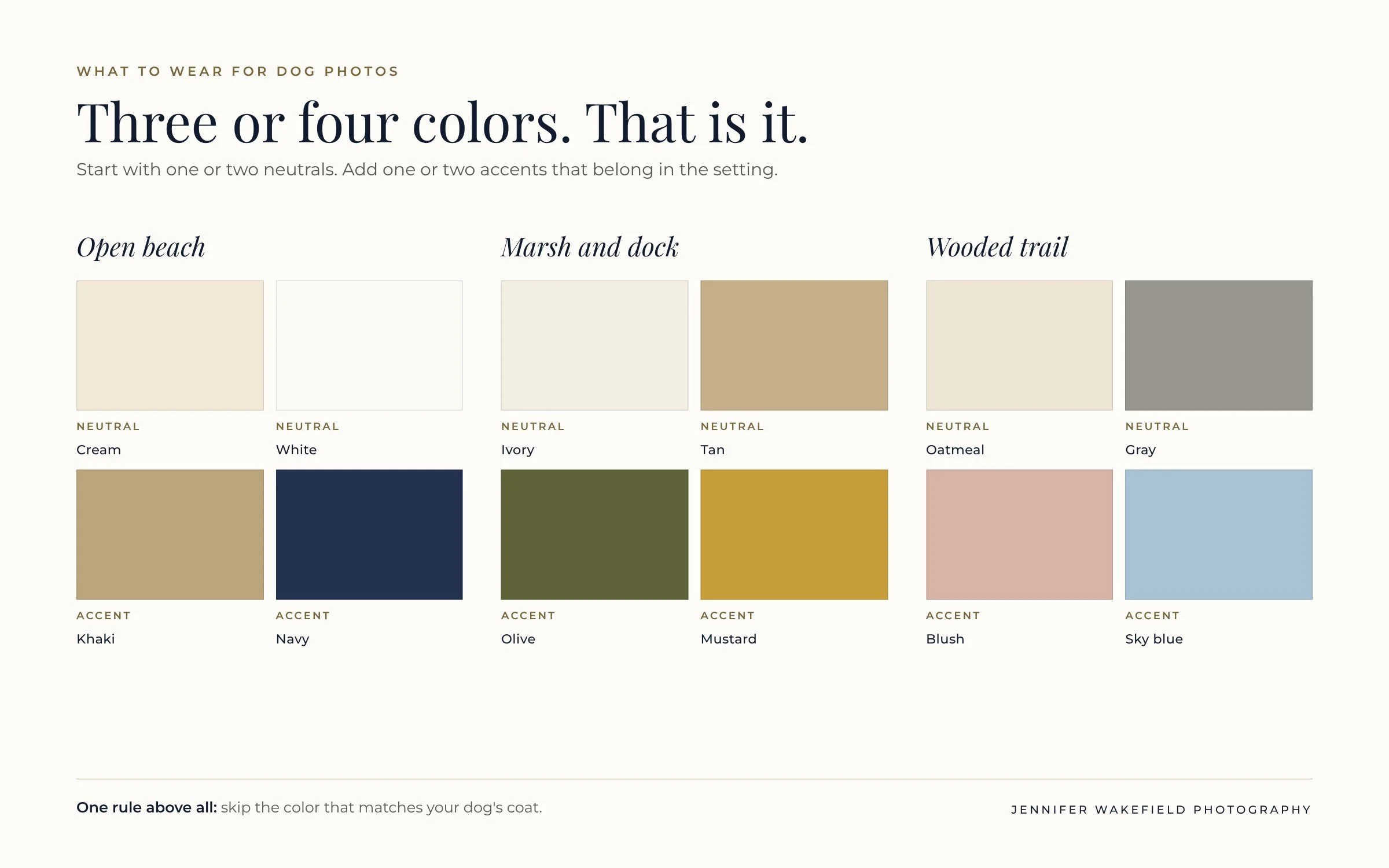
A few things to watch forDo not wear the same color as your dog. A honey colored Golden Retriever in a mustard sweater will disappear right into the frame.
Watch contrast with your dog's coat. Full black next to a white dog, or full white next to a black dog, tends to read harsh rather than flattering.
Keep top and bottom in the same tonal range. Light with light, dark with dark. It is one of the simplest tricks for looking a little taller and a lot more put together.
Bold color can work. Hot pink, bright red, or neon green suit a punchy urban look or a studio session if that is genuinely your style. They can cast color onto a lighter coated dog standing close to you, so we will talk it through before you commit to head to toe neon.
What Fabrics and Patterns Work Best in Photos?
Texture photographs beautifully. Cable knit sweaters, denim, linen, waffle weave. These all add depth and catch the light in a way a flat cotton tee never will.
Natural fibers also move the way you want them to. Wind, water, dune grass. Linen and cotton drift and fold with you instead of fighting you.
Patterns can work in small doses. Classic ones like a subtle plaid, gingham, or a small floral are the safest bet. Skip anything busy or high contrast, and here is the actual technical reason why: fine, tight patterns can create something called a moiré effect in a photograph, a strange rippling pattern that shows up in the final image and is very difficult to edit out. It is rare, but it happens, and there is no reason to risk it for a shirt you could just as easily leave in the closet that day.
One more honest note: if you share your home with a heavy shedder, you probably already know which fabrics show every single hair. Plan accordingly.
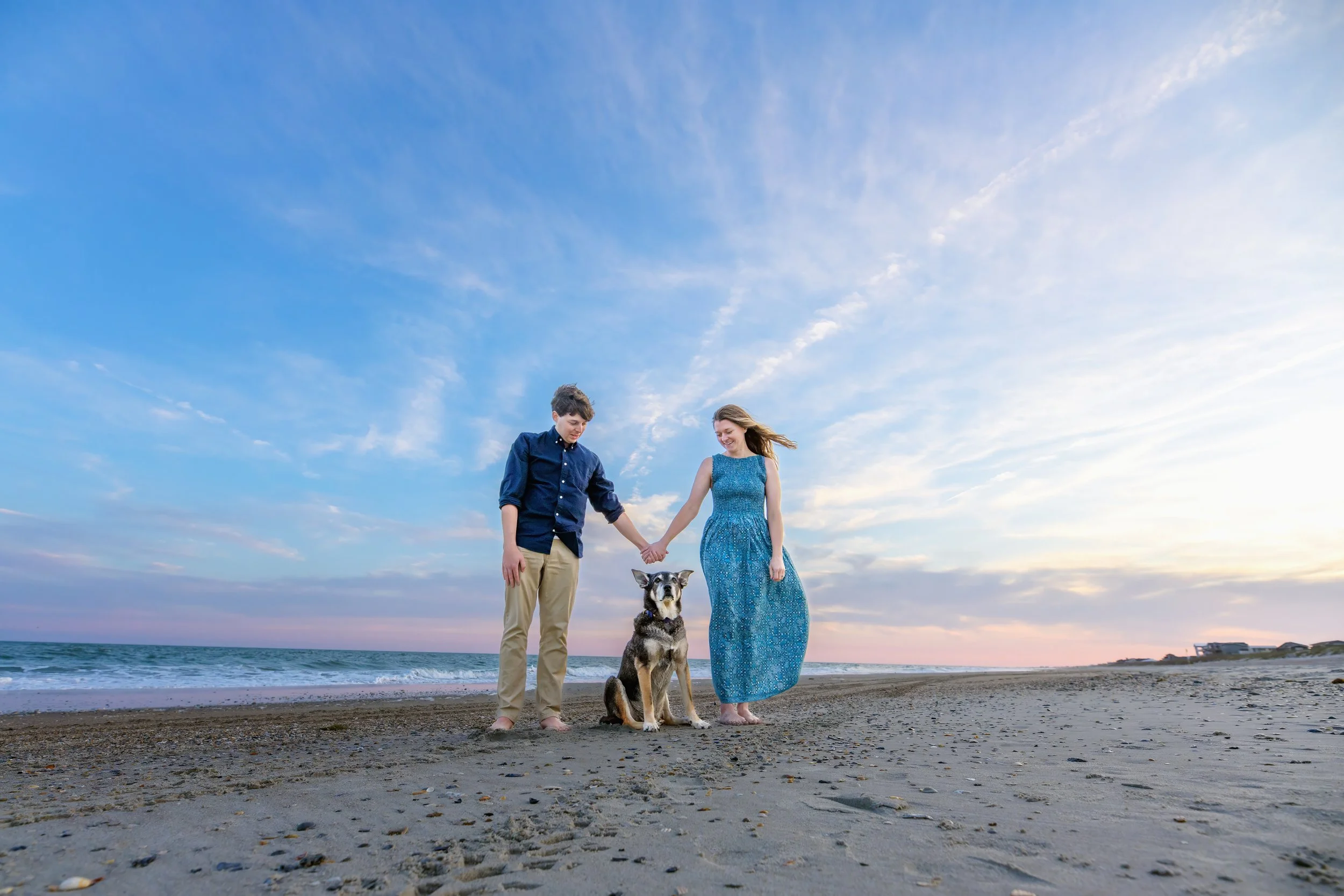
Knit, linen, and fur. Texture does the work a busy pattern never could.
What About Accessories?
Hats, scarves, belts, jewelry, and layered pieces all photograph beautifully, but pick one statement piece or a couple of understated ones. Not both at once.
Ball caps and other stiff brimmed hats are worth a second thought, not an automatic no. A brim can shadow your eyes right when we want to see your face, so if you are hoping for that classic, posed, straight at the camera portrait, it is better left at home. But if we are shooting candid and in the moment, which is where my style naturally leans, or that hat is just part of who you are out on the boat or in the field, wear it. It belongs in the photo as much as you do.
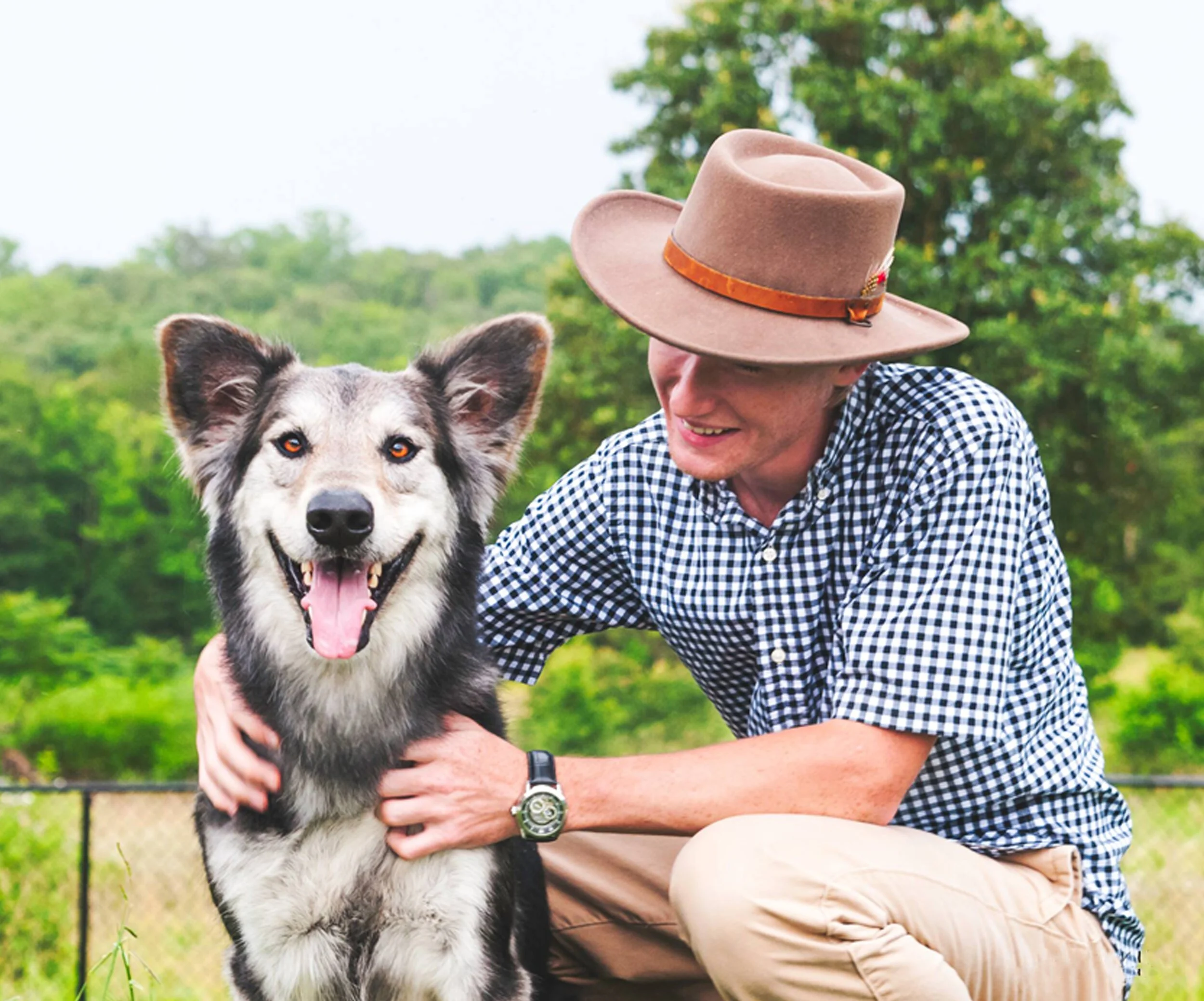
One statement hat, one small classic pattern.
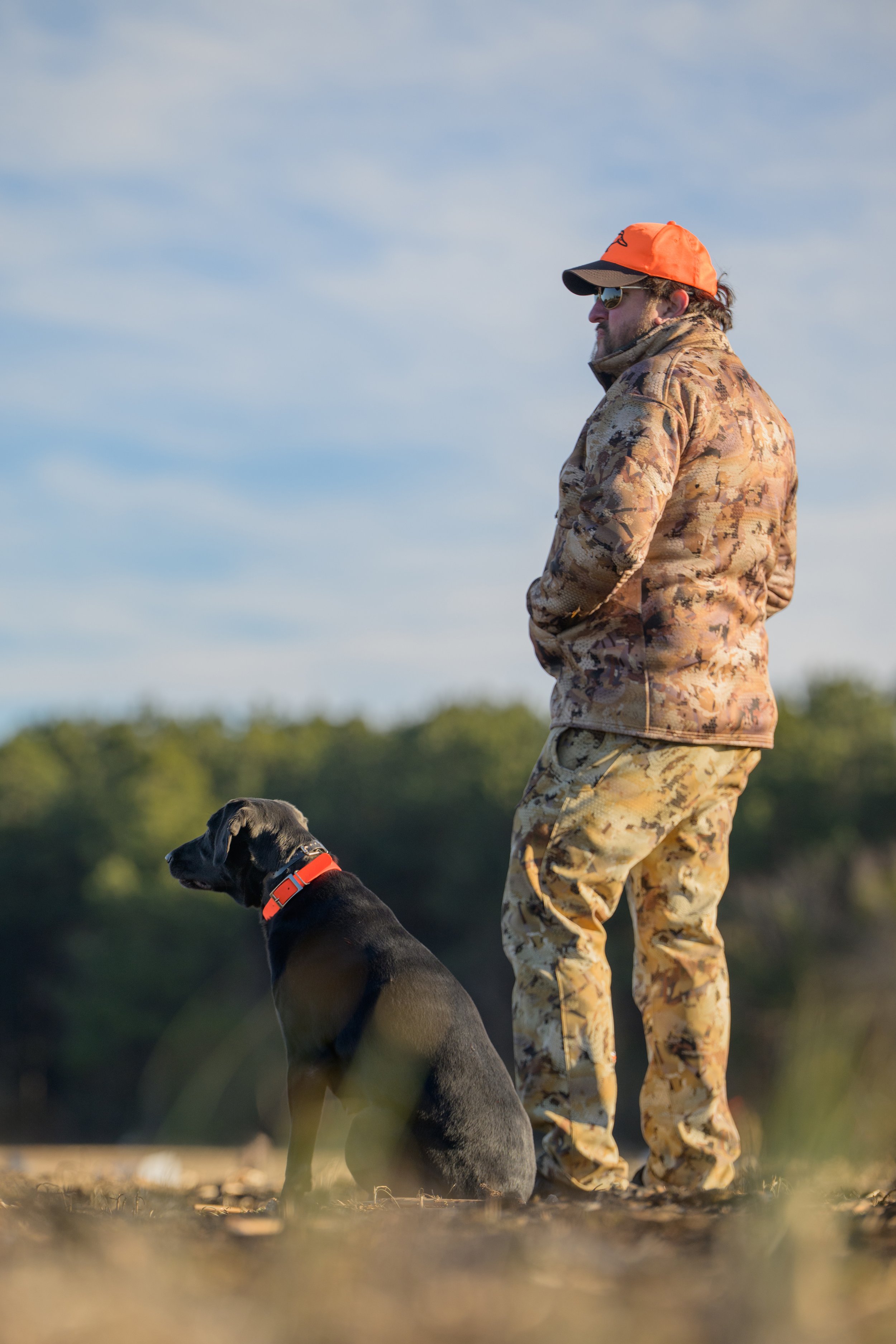
Hunting Adventures
What Should You Wear for a Hunting Adventure Session?
Wear exactly what you would wear on any other hunt. You already know what that is.
Your real gear belongs in your hunting adventure photos. Blaze orange, the boots you have broken in over a few seasons, the vest that has carried more shells than you could count. Camo is optional for upland birds. In a waterfowl blind, wear it like you always would.
None of it needs to look new. A faded cap and a muddy pair of waders tell the story better than anything off a store shelf.
What Should Kids Wear?
Same idea as the adults: comfortable, play ready clothes they can move in without thinking about it. Jeans, leggings, and simple tops all work well. Skip anything with a big character or logo splashed across the front, since it pulls focus fast, and bring a light jacket or vest along if there is any chance they will need it.
What Should You Skip Entirely?
Skip gym clothes, big logos, baggy fits, transition lenses, and full pockets. Here is why each one causes trouble.
Gym clothes and giant logos. They pull attention away from you and your dog.
Baggy, loose pieces. They lose their shape the moment you kneel or sit.
Transition lenses. Bright sun and studio lighting darken them faster than you would expect, and your eyes disappear from the shot. Bring a backup pair without the coating if you have one.
Full pockets. A phone or wallet bulge is more noticeable than you would think. Hand it to whoever is with you, or tuck it in your bag.
What About Shoes?
Think about where we are shooting before you pick your shoes.
Barefoot works beautifully on the beach. Boots feel right in the woods. If the walk to our spot is longer or rougher than the shoes you want in the actual photos, bring both. Wear the practical pair to get there, then switch once we arrive.
Shoes show up in more of the images than people expect, especially the low, close ones with your dog. If you have a great pair of boots or worn in sneakers with some personality, this is a good day to wear them. One small note if you are in anything that shows the ankle: skip the ankle socks, they tend to look a little awkward in photos.
If you are in open toed shoes or sandals, a fresh pedicure goes a long way. And if your polish is chipped and there is no time to fix it, just take it off entirely. Bare nails are far less noticeable in a photo than chipped polish.
What Should You Know About Coastal Wind and Movement?
Plan for wind on any beach session, especially between Emerald Isle and Atlantic Beach, and choose pieces that still look right when they move.
You will be moving during your session, up and down, side to side, at your dog's pace more than your own, so comfort and range of motion matter more than they might seem to at first.
Emerald Isle is home to the Shibumi shade for a reason, and on a breezy day that same wind will absolutely be a factor in your photos. If you are considering a dress, be mindful of the length between your own movement and the wind working together against you.
Hair is worth a passing thought too. I am not one to say you need to style it differently than usual, truly wear it however feels like you, but on a windy day it helps to have a plan. A clip or a small brush tucked in your bag is an easy way to reset between shots if things get a little wild.
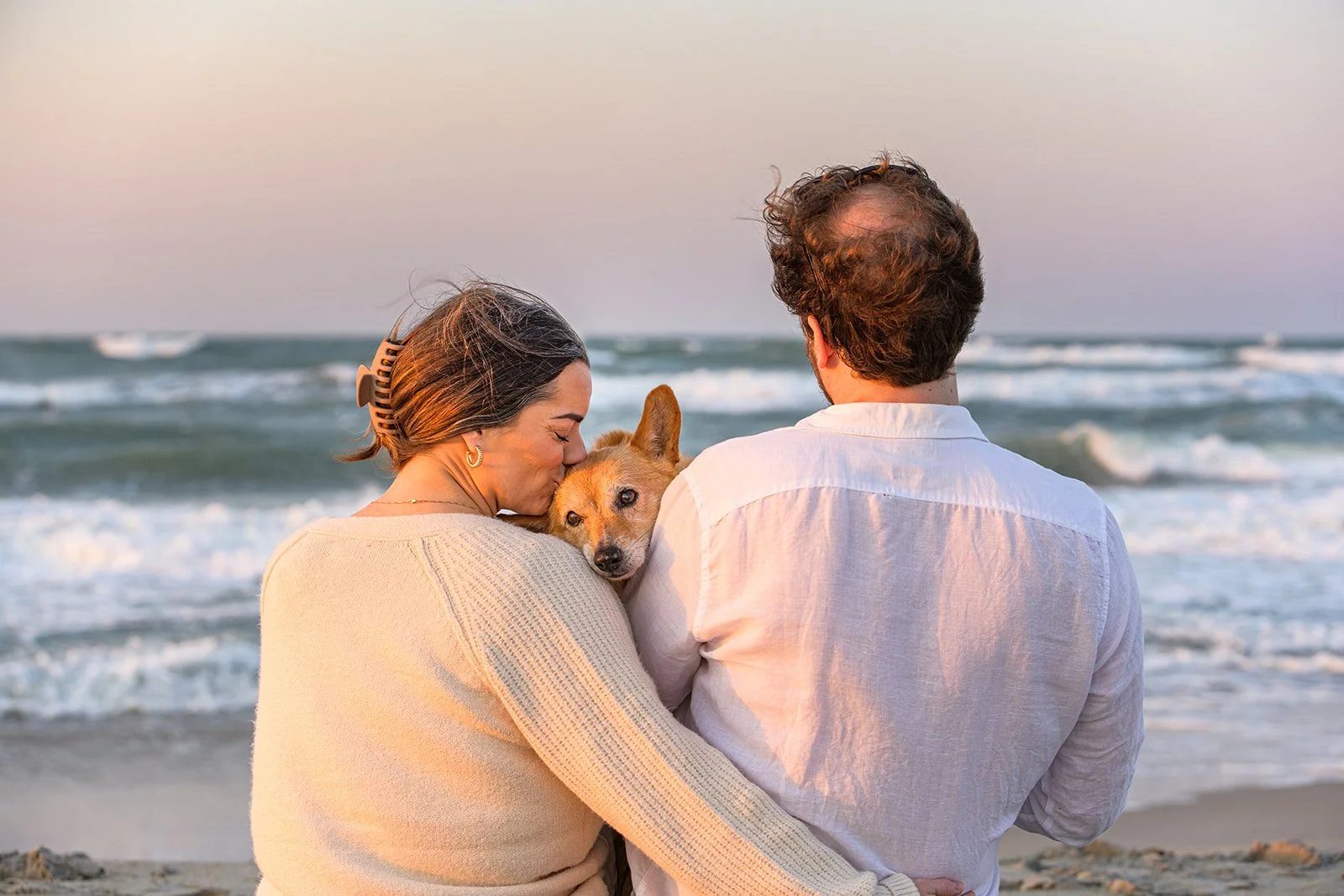
One claw clip, a very windy evening, and not a single shot lost to it.
These images are not staying on your phone. They are going on your wall.
How Do You Choose an Outfit That Matches Your Wall Art?
Here is the part almost nobody thinks about ahead of time, and it might be the most useful tip in this whole post.
These images are not staying on your phone. They are going on your wall.
If you wear a bold formal look but your home is casual and coastal, the final piece can end up feeling like it belongs somewhere else. A navy sweater and denim in a home full of warm woods and soft neutrals feels like it was always meant to hang there.
Before you get dressed, take thirty seconds and think about the room where this artwork will live. Let that room help choose your colors, not just the season or your closet.
If you are still deciding how big that piece should be, my guide to sizing dog portrait wall art walks through it.
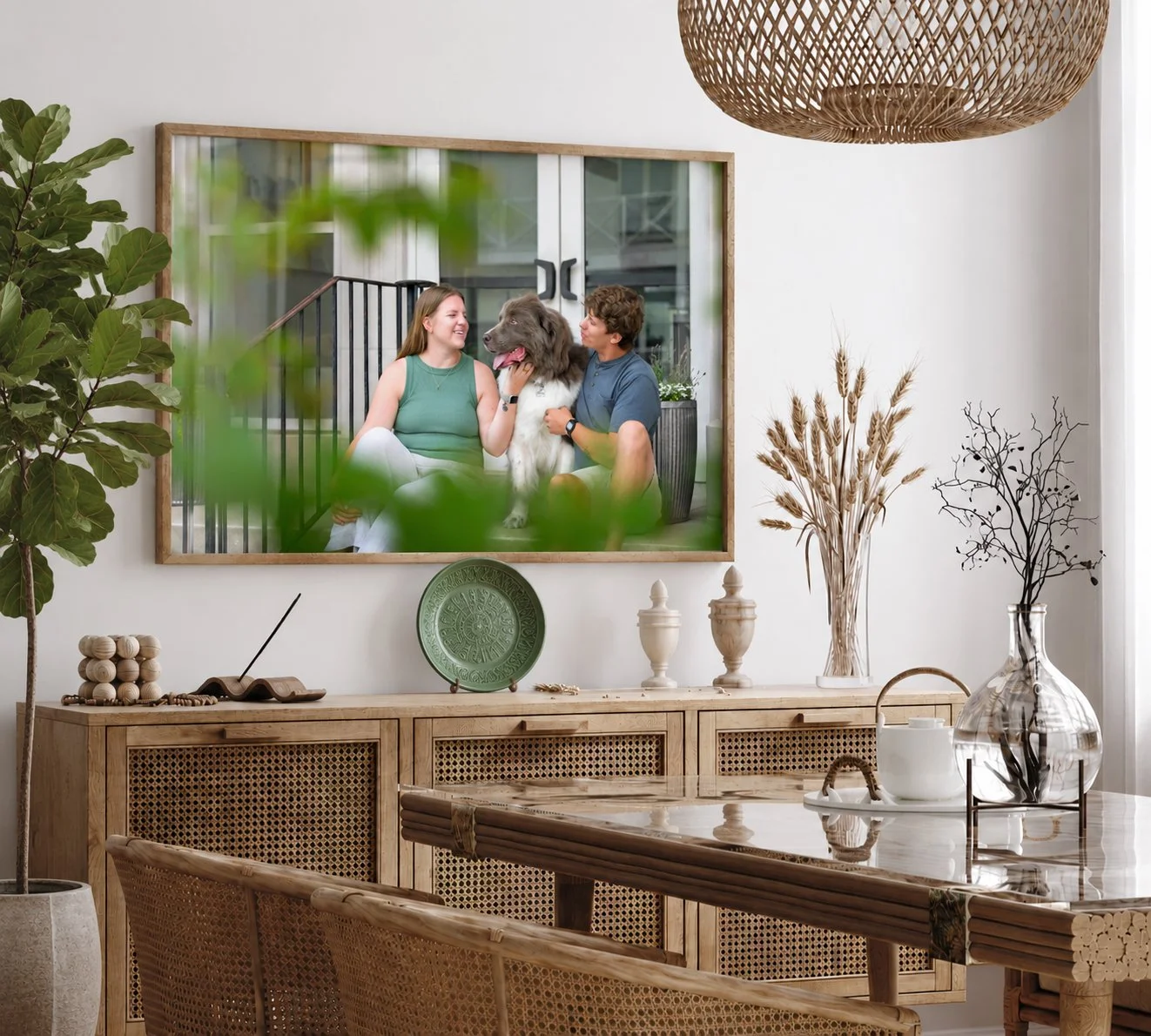
Wall art styling: sage green in the portrait, sage green in the room.
You do not need a stylist. You do not need a new wardrobe. You need three or four colors that work together, a little texture, comfortable shoes, and a version of yourself that feels like you on a good day.
And if you and your dog are dreaming up a full costume or themed session, I am genuinely up for it. Just give me a heads up ahead of time so I can plan the session around it properly.
Everything else, I will handle.
If you are getting ready for an upcoming session and want a second opinion on an outfit, send me a photo before the day. I am always happy to help you feel confident walking in.
Visiting Emerald Isle on vacation? Pack one outfit with your session in mind, and we will plan the rest around your travel dates.
Jennifer Wakefield Canine & Equine Photography is a fine art dog and horse portrait studio in Newport, near Emerald Isle, on the Crystal Coast of North Carolina, and available to travel. If you are picturing this artwork on your own wall, I would love to help you get dressed for it.